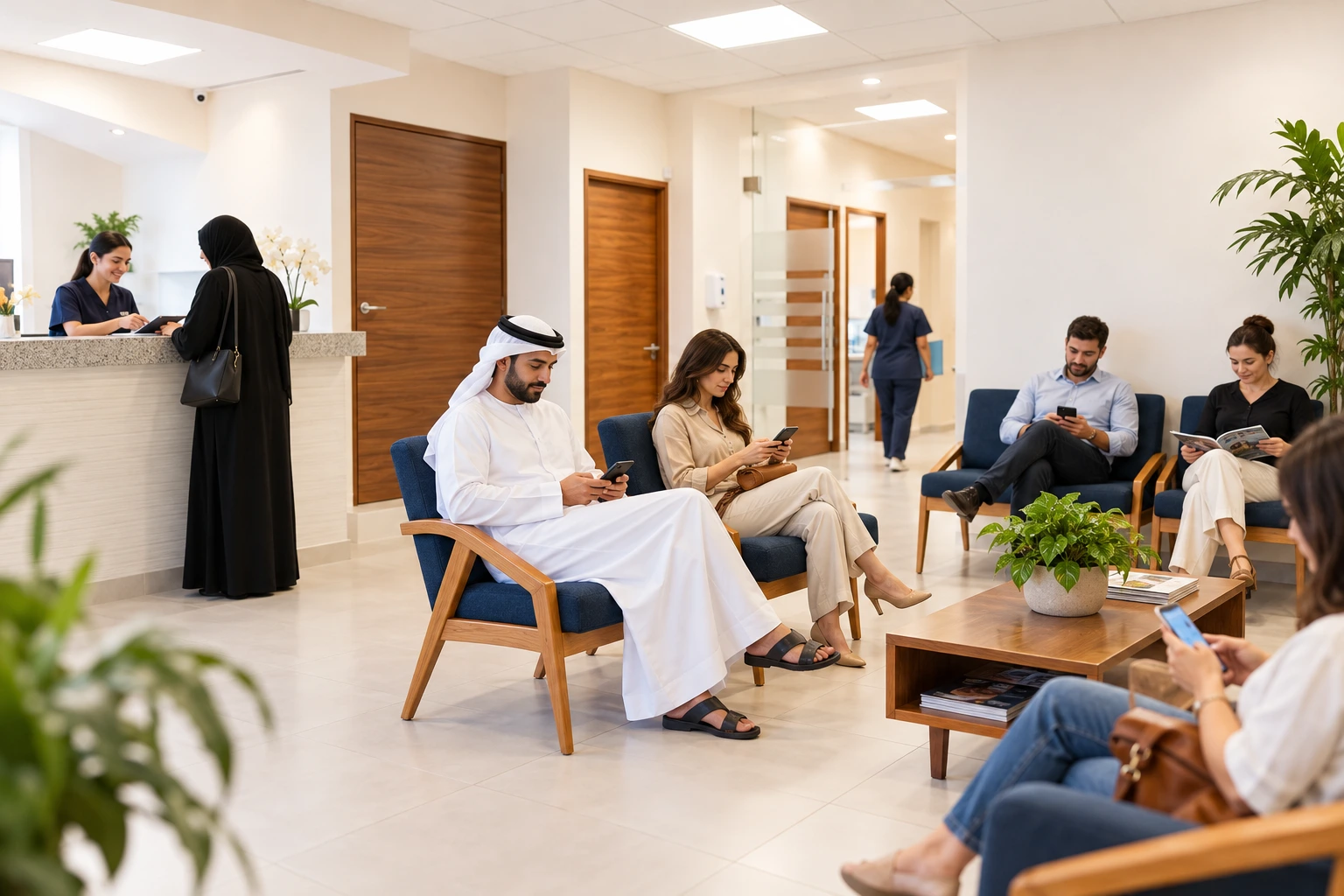
It’s 10:30 on a Tuesday. The doctor is ready, the room is prepped, and the patient booked for 10:30 isn’t coming. Nobody called. Nobody messaged. The slot just sits there, empty.
One no-show doesn’t feel like much. But if you run a clinic in Dubai, Abu Dhabi or Sharjah, you know it’s never just one. A couple a day turns into dozens a month, and every one of them is a paid hour of a doctor’s time, a room, and a receptionist’s effort that produced nothing. Worse, it’s often a slot another patient would have happily taken.
The good news: most no-shows aren’t random. They follow patterns, and patterns can be fixed. This guide walks through why patients in the UAE miss appointments and the practical steps clinics are using to bring that number down.
Why patients don’t show up
Before you fix anything, it helps to be honest about the reasons. In our experience talking to clinic teams, very few patients skip on purpose. Most of the time, something simpler is going on.
They forgot. This is the big one. An appointment booked two or three weeks out is easy to lose track of, especially for busy professionals juggling work, family and Sheikh Zayed Road traffic.
Their plans changed, and cancelling felt like a hassle. If the only way to cancel is to call during working hours and wait on hold, a lot of people simply won’t. Not showing up is the path of least resistance.
They booked in a moment of interest, not commitment. This is common with elective treatments like aesthetics, cosmetic dentistry or laser eye surgery. Someone sees an Instagram ad, sends a WhatsApp message at midnight, books a consultation, and by next week the excitement has faded.
They weren’t sure what to expect. Uncertainty about price, preparation or what happens during the visit makes people nervous. Nervous patients find reasons not to come.
Logistics got in the way. Parking, school runs, a meeting that ran late. In a city where a 15-minute drive can easily become 45, timing matters more than clinics sometimes admit.
Notice that almost every one of these comes back to communication. That’s where the fixes are.
7 practical ways to reduce no-shows
1. Confirm the booking the moment it’s made
A quick confirmation message right after booking does more than you’d think. It turns a vague “yeah, Thursday works” into something concrete: the date, the time, the doctor’s name, the clinic’s location pin. Patients who get a clear confirmation are already more committed than those who just hung up the phone.
2. Send reminders on WhatsApp, not just SMS or email
In the UAE, WhatsApp is where people actually live. An SMS from an unknown sender gets ignored, and emails get buried. A friendly WhatsApp message from your clinic’s number gets read.
A simple rhythm that works well for most clinics:
- 2–3 days before: a reminder with the date, time and any preparation instructions
- The day before: a short message asking the patient to confirm, with an easy way to reschedule
- A few hours before: an optional nudge with the location and parking tips
Keep the tone warm and human. “Hi Sara, just a reminder you’re seeing Dr. Ahmed tomorrow at 4pm. Reply 1 to confirm or 2 if you need a different time” works far better than a cold system notification.
3. Make rescheduling ridiculously easy
This one is counterintuitive, but it’s important. If cancelling is hard, patients don’t cancel. They just disappear. If rescheduling takes one reply on WhatsApp, they’ll move the appointment instead of skipping it, and you get the slot back in time to offer it to someone else.
The goal isn’t to stop people from changing plans. It’s to find out early enough to do something about it.
4. Speak the patient’s language
The UAE’s patient base is wonderfully diverse. A reminder in Arabic for an Emirati family, or in English for an expat professional, feels personal. A message in the wrong language feels like spam. If your team can’t cover every language at every hour, this is where automation earns its keep.
5. Set expectations before the visit
Tell patients what to bring, how long the visit takes, whether they need to fast, and roughly what it will cost. For high-value treatments, a short message answering the most common questions can turn a nervous patient into a confident one. Fewer surprises mean fewer cold feet.
6. Consider a deposit for high-value appointments
For surgical consultations, long treatment sessions or specialist slots with long waiting lists, a small refundable deposit can make a real difference. Be careful with this one, though. Introduce it gently, explain why, and don’t apply it to routine visits where it would just push patients toward a competitor.
7. Follow up with patients who missed
A no-show isn’t always a lost patient. A kind message the same day, something like “We missed you today, would you like to rebook?”, often recovers the appointment. It also tells you why they didn’t come, which is useful data for everything above.
Keep a simple record of repeat no-shows too. A patient who misses three times probably needs a confirmation call before their next booking, not just a message.
The honest problem: your front desk can’t do all of this
Read that list again and think about your reception team. They’re already answering phones, checking patients in, handling insurance questions and dealing with whoever is standing at the desk. Now add personalised WhatsApp reminders in two languages, same-day follow-ups, and replying to the patient who messages at 11pm asking to move tomorrow’s appointment.
It’s not that your team isn’t good. It’s that there are only so many hours, and most of this work happens outside them. Patients decide to cancel on the sofa at night, not during your opening hours.
This is exactly the gap an AI front desk is built for. Tools like Rābetica handle the repetitive side of patient communication around the clock: sending reminders, answering WhatsApp messages in Arabic or English, rescheduling straight into your clinic’s calendar, and handing the conversation to a real person when it needs one. Your team stays focused on the patients in front of them, and the empty-chair problem gets handled in the background.
Whatever tool you use, the principle is the same: the clinic that answers fastest and makes changes easiest is the clinic patients actually show up to.
Start by measuring where you are
You can’t improve what you don’t track. Before changing anything, pull your numbers for the last three months:
- What percentage of booked appointments were no-shows?
- Which days, times and doctors have the highest rates?
- How far in advance were the missed appointments booked?
- Did those patients get a reminder, and on which channel?
You’ll probably spot patterns quickly. Monday mornings, appointments booked more than two weeks out, and first-time patients who found you through ads are common trouble spots. Fix the worst one first, measure again in a month, then move to the next.
Frequently asked questions
What is a good no-show rate for a clinic?
There’s no single number that fits every clinic. It depends on your specialty, how far ahead patients book, and how many are first-time visitors. The more useful benchmark is your own: measure your current rate, put reminders and easy rescheduling in place, and compare month over month. If the number is falling, you’re on the right track.
How far in advance should clinics send appointment reminders?
Most clinics get the best results with two or three touchpoints: one reminder two to three days before, a confirmation request the day before, and an optional short nudge a few hours ahead. For appointments booked weeks in advance, an extra reminder a week out helps too.
Is WhatsApp better than SMS for patient reminders in the UAE?
For most clinics, yes. WhatsApp is the main way people in the UAE communicate, so messages are more likely to be read and answered. It also lets patients confirm or reschedule with a single reply, which SMS from a short code usually can’t do as smoothly.
Should clinics charge patients for missed appointments?
It can work for high-value or hard-to-fill slots, such as surgical consultations or long treatment sessions. For routine visits it often does more harm than good. If you introduce a deposit or fee, explain the policy clearly at booking and keep it fair, so patients see it as reasonable rather than punitive.
How can clinics reduce no-shows for first-time patients?
First-time patients, especially those who came from ads or social media, miss appointments more often because they have less commitment to the clinic. Confirm the booking immediately, tell them exactly what to expect and what it will cost, and send a personal reminder in their preferred language. A quick reply to any last-minute questions makes a big difference.
Can an AI receptionist really reduce patient no-shows?
It can, because most no-shows come down to communication gaps. An AI receptionist sends reminders on time, every time, replies to patients instantly on WhatsApp or by phone, and lets them reschedule at any hour instead of waiting for the clinic to open. That means fewer forgotten appointments and more cancelled slots recovered in time to rebook.
The bottom line
No-shows feel like something that just happens to clinics. They aren’t. Most of them come down to a patient who forgot, felt unsure, or found it easier to vanish than to call. Clear confirmations, friendly WhatsApp reminders, easy rescheduling and a quick follow-up solve the majority of the problem.
The clinics that get this right don’t just fill more chairs. They build the kind of patient experience people remember, and come back for.
Want to see how an AI front desk could handle reminders and rescheduling for your clinic? Book a short demo with the Rābetica team.