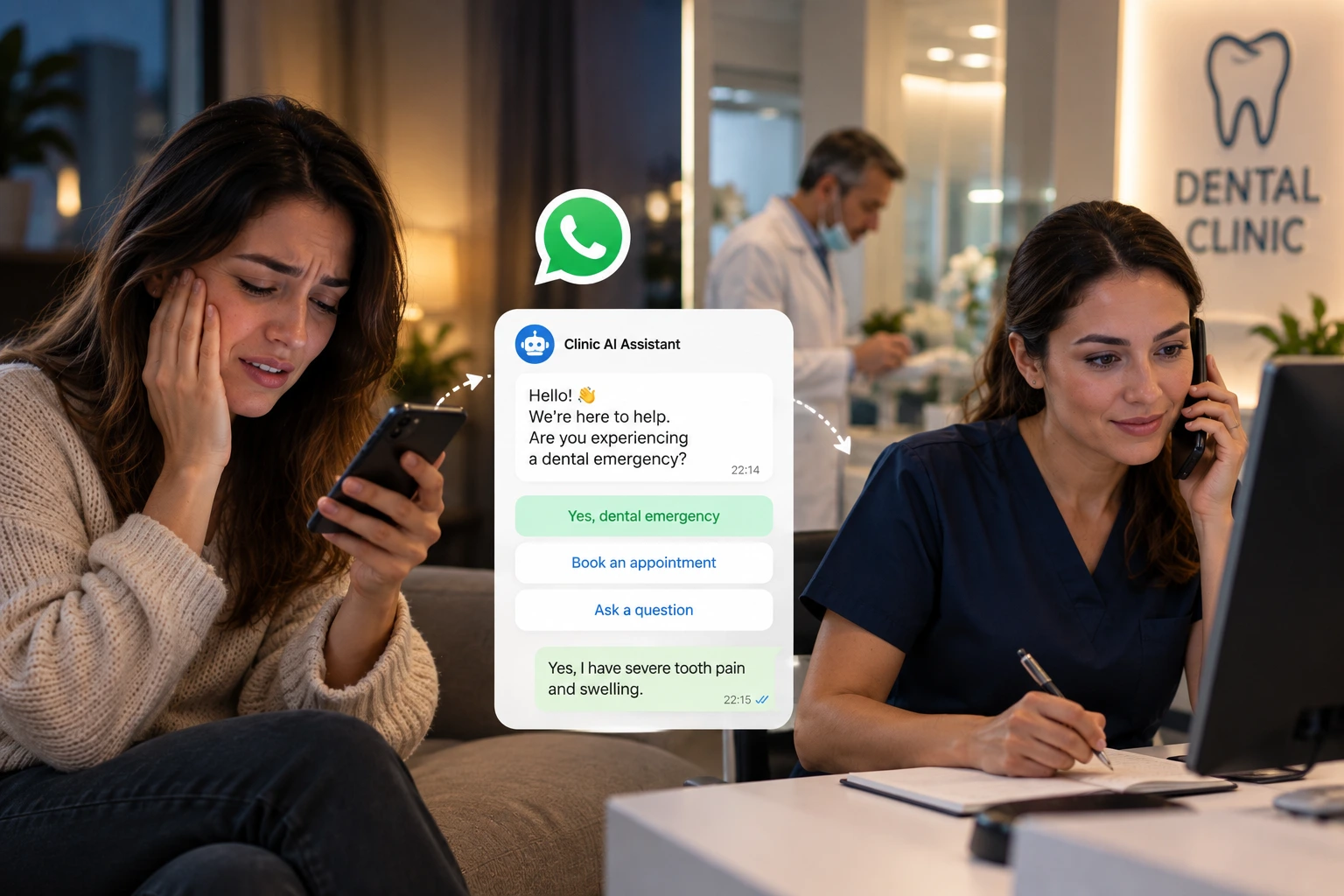
Toothache has terrible timing. It flares up on a Thursday night, a child knocks out a tooth at a weekend football match, a crown comes loose during dinner on a public holiday. And the first thing most people do is call their dentist.
If your clinic answers with a recorded message and nothing else, two things happen. Patients in genuine pain feel abandoned, and many of them call the next clinic on Google Maps. Some never come back.
Handling after-hours dental calls well isn’t about having a dentist awake 24/7. It’s about having a clear protocol: knowing which calls are true emergencies, which can safely wait until morning, and making sure every caller gets the right direction and, where possible, a booked appointment. This guide shows dental clinics in the UAE how to set that up.
What callers mean by “emergency”
When a patient calls after hours and says it’s an emergency, it could mean very different things. Most clinics find their after-hours calls fall into three groups. Your dentists should define the exact list for your clinic, but here’s the structure.
| Category | Typical examples | What should happen |
|---|---|---|
| Needs emergency medical care now | Swelling affecting breathing or swallowing, uncontrolled bleeding, serious facial injury, high fever with facial swelling | Direct the caller to hospital emergency services or 998 immediately |
| Urgent dental problem | Severe toothache, a knocked-out or badly displaced tooth, significant swelling, dental trauma, pain after a recent procedure | Contact the on-call dentist, or book the first emergency slot, following your protocol |
| Can safely wait for a normal appointment | Lost filling without severe pain, loose crown, chipped tooth, mild sensitivity, broken retainer | Book the next suitable appointment and share any approved self-care information |
Two important points. First, whoever answers the phone, a receptionist or an AI, isn’t diagnosing. They’re following a protocol your dentists wrote, and escalating whenever they’re unsure. Second, when in doubt, escalate. It’s always better to wake an on-call dentist unnecessarily than to tell someone in real trouble to wait.
Building your after-hours dental emergency protocol
1. Write the categories down with your dentists
Agree on what counts as each category, the questions to ask (“Is the swelling affecting your breathing or swallowing?”, “Has the tooth been completely knocked out?”), and what to do for each. Keep it to one page.
2. Decide who covers urgent cases
Common options for UAE dental clinics:
- An on-call dentist rota, with a clear phone number for escalation
- A partner emergency clinic or hospital for out-of-hours cases you can’t see
- Reserved emergency slots first thing in the morning for urgent cases from the night before
Many clinics combine all three.
3. Prepare approved self-care information
For common situations, have your dentists write short, approved guidance that can be shared while the patient waits, for example what to do with a knocked-out tooth on the way to the clinic, or how to manage until a morning appointment. Only share information your dentists have written and signed off.
4. Make sure every caller reaches a real answer
A recorded message that just says “we’re closed” isn’t a protocol. At minimum, after-hours callers need clear emergency directions, a way to book the next available appointment, and a way to reach the on-call dentist for urgent cases.
5. Log every after-hours emergency call
Record who called, what they described, what advice they were given and what happens next. It protects patients, supports your team and helps you spot patterns.
Scripts for after-hours calls
Adapt these to your protocol. The tone should always be calm and reassuring.
Opening
“Thank you for calling [Clinic Name]. I’m sorry you’re dealing with this. Can you tell me what’s happening?”
Checking for emergency signs
“Is the swelling making it hard to breathe or swallow? Is there bleeding that won’t stop?”
If it needs emergency medical care
“Based on what you’re describing, please go to the nearest hospital emergency department now, or call 998. Please don’t wait for a dental appointment. We’ll follow up with you tomorrow.”
If it’s urgent and dental
“I’m going to contact our on-call dentist now, and they’ll call you back within [time].” or “I can book you into our first emergency appointment tomorrow at [time]. In the meantime, here’s some guidance from our dentists.”
If it can wait
“That sounds uncomfortable, and we’ll make sure you’re seen. I can book you for [day and time]. If anything gets worse, like severe pain or swelling, please call us back straight away.”
On WhatsApp
Hi [Name], we’re sorry you’re in pain. Our on-call dentist has been notified and will contact you shortly. If you have swelling that affects your breathing or swallowing, or bleeding that won’t stop, please go to the nearest emergency department or call 998 now.
The next morning: follow-up and emergency slots
What you do the morning after matters as much as what happens at night.
- Reserve emergency slots early in the day for patients from the night before. Many clinics keep one or two slots per dentist free until mid-morning.
- Review the overnight log first thing. Every urgent call should have a booked appointment or a follow-up call before 9am.
- Call patients who were sent to hospital. A short check-in builds enormous loyalty, and they may need follow-up treatment.
- Contact anyone who called but didn’t book. They may still be in pain, and may otherwise go elsewhere.
After-hours calls aren’t only emergencies. Many are people booking routine check-ups in the evening. For the bigger picture, read our guide to after-hours patient calls.
Where AI fits in
Most dental clinics can’t keep a receptionist on the phones all night. An AI receptionist can answer every after-hours call and message, follow your clinic’s protocol, and make sure no patient in pain hears only a recording.
Rābetica answers your clinic’s calls and WhatsApp messages 24/7, in Arabic or English. After hours, it can:
- Answer every call, however many come in
- Recognise signs of a serious emergency and direct the caller to emergency care
- Pass urgent dental cases to your on-call team, following your rules
- Book the next available or emergency appointment straight into your calendar
- Handle routine evening bookings and reschedules too
It never diagnoses or gives medical advice; it follows the rules your dentists set and hands over whenever a person is needed. The result: patients in pain get a calm, immediate response, your on-call dentist only hears about the cases that need them, and the morning starts with a booked diary instead of a list of missed calls. See how it works for dental clinics.
Frequently asked questions
What counts as a dental emergency?
Common dental emergencies include severe toothache, a knocked-out or badly displaced tooth, significant swelling and dental trauma. Swelling that affects breathing or swallowing, uncontrolled bleeding or serious facial injuries need hospital emergency care immediately. Each clinic’s dentists should define their own protocol.
How should a dental clinic handle emergency calls after hours?
With a written protocol: questions to identify serious emergencies, clear direction to hospital care when needed, an on-call dentist or partner clinic for urgent dental cases, reserved emergency slots the next morning, and a log of every call.
Should dental clinics have an on-call dentist?
Many do, either on a rota or through a partner clinic. Even if you don’t, every after-hours caller should get clear emergency directions and a way to book the next available appointment.
What should a dental clinic’s after-hours message say?
It should explain what to do in a serious emergency, including calling 998 or going to the nearest emergency department, how to reach the on-call dentist for urgent dental problems, and how to book an appointment.
Can an AI receptionist handle dental emergency calls?
It can answer the call, recognise emergency signs using the clinic’s protocol, direct callers to emergency care, alert the on-call dentist and book emergency appointments. It should never diagnose or give medical advice.
How quickly should clinics follow up after an emergency call?
Urgent cases should be followed up the next morning at the latest, ideally with a booked emergency slot. Patients who were sent to hospital deserve a check-in call too.
The bottom line
A patient in dental pain at 11pm won’t forget how your clinic treated them. A recorded message tells them to look elsewhere. A calm answer, clear direction and a booked appointment tell them they’ve chosen the right dentist.
Write a simple protocol with your dentists, decide who covers urgent cases, prepare your scripts and approved guidance, protect morning emergency slots and follow up every time. Then make sure every after-hours call actually gets answered.
Want every after-hours dental call answered and routed correctly, in Arabic and English? See how Rābetica works for dental clinics or book a 30-minute demo.