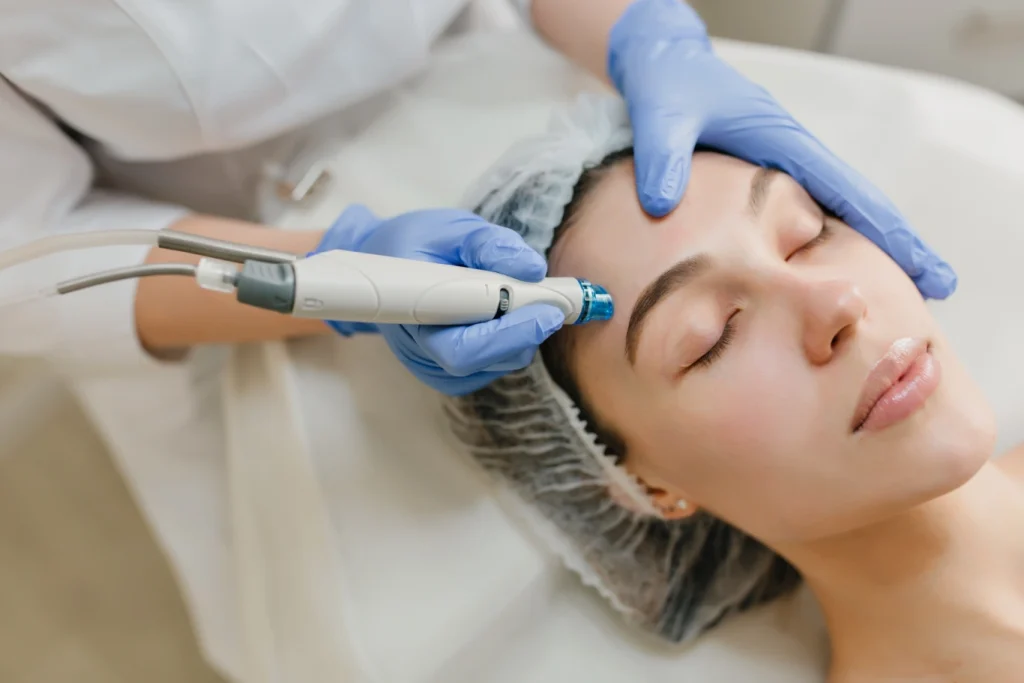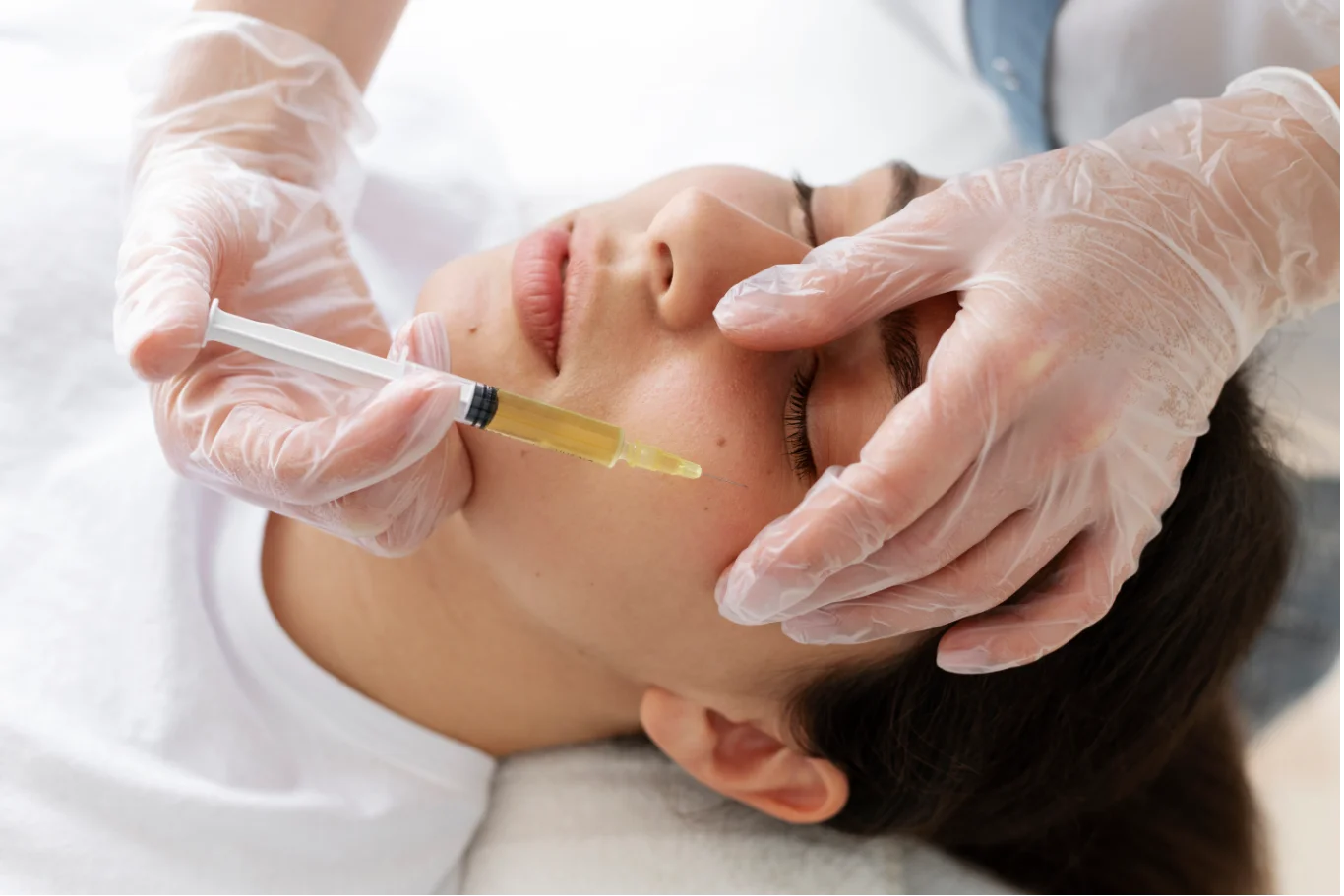
PRP — platelet-rich plasma — has been a standard part of orthopaedic and surgical medicine for decades. Its use in aesthetics is more recent but now well-documented, and it occupies a specific and important niche: it’s derived entirely from the patient’s own blood, which makes it autologous, and its growth factor content is what drives its effect rather than any synthetic or foreign material.
For patients in Dubai who prefer to minimise synthetic injectable substances, or who have religious reasons for choosing treatments sourced from their own body, PRP sits in a different category from HA fillers or biostimulating injectables. Understanding what it actually does, where it works well, and how the religious question is typically addressed by scholars helps patients make a genuinely informed decision.
What PRP Is and How It’s Made
A blood draw of roughly 10 to 20ml is taken from the patient’s arm — a similar amount to a standard blood test. The tube is placed in a centrifuge that spins at high speed, separating the blood into its components by density. The platelet-rich plasma layer is drawn off and prepared for injection.
Platelets contain hundreds of growth factors — PDGF (platelet-derived growth factor), TGF-beta (transforming growth factor), VEGF (vascular endothelial growth factor), IGF (insulin-like growth factor), and others — that play a central role in tissue repair, cell proliferation, and collagen synthesis. When injected into or applied to tissue, these growth factors signal the surrounding cells to begin repair and regeneration processes.
Because the material is entirely derived from the patient’s own blood, allergic reaction risk is essentially zero. There is no foreign substance introduced. The main risk is the same as with any injection: bruising, temporary soreness, and in poorly performed procedures, infection or vascular complications.
What It Does Well
Facial skin quality and glow: PRP injected into the dermis or applied via microneedling improves skin hydration, collagen density, and luminosity over a series of sessions. The effect is subtle relative to HA filler — it doesn’t add structural volume — but for patients whose concern is texture, early fine lines, dullness, and a general loss of radiance rather than volume loss, PRP is clinically appropriate. Three to four sessions, four to six weeks apart, is the standard initial course.
Under-eye area: The tear trough and upper cheek region thin with age, creating a hollow and tired appearance. PRP injected into this zone is a gentler option than HA filler for patients concerned about the puffiness risk that poorly placed tear trough filler carries. Results are subtler and take longer to appear, but the risk profile is lower.
Acne scar programmes: PRP applied topically after microneedling or injected directly into the scarred tissue amplifies the collagen induction response of the procedure. It’s not a standalone scar treatment but functions as an accelerator and downtime reducer when added to a microneedling or RF microneedling session. See 3-Month Acne Scar Reset for where it fits in a broader programme.
Hair thinning: PRP is one of the better-evidenced non-surgical options for androgenetic alopecia (genetic thinning). Injected into the scalp, the growth factors stimulate dormant follicles and extend the active growth phase. Three to four initial sessions followed by maintenance every four to six months is the standard protocol.
Where Its Limits Are
PRP does not restore lost facial volume. For patients whose primary concern is structural deflation — flattened cheeks, recessed chin, or significant nasolabial fold depth — HA filler remains the more appropriate structural tool, and PRP can complement it by improving surrounding skin quality. See Dermal Fillers in Dubai for how structural restoration works.
PRP is also not the fastest-acting treatment. Changes build over weeks to months as growth factors stimulate new tissue formation. Patients looking for immediate visible change after a single session will find it less dramatic than fillers or laser. The payoff is a natural, gradual improvement that doesn’t require ongoing maintenance of a foreign substance.
The Halal Question for PRP
The permissibility of PRP in Islamic jurisprudence is approached differently from synthetic fillers precisely because of its autologous nature.
The key question in Islamic rulings on blood and blood products is whether the blood has undergone sufficient transformation (istihalah) to be considered a different substance with a different ruling. The scholarly discussion on PRP addresses this: when blood is centrifuged, the plasma fraction that constitutes PRP is argued by several scholars to have undergone sufficient transformation, and its use for treatment under conditions of benefit and avoiding harm is therefore considered permissible by major fiqh bodies.
Malaysian scholars at IKIM (Institut Kefahaman Islam Malaysia) have issued a formal position that PRP is permissible for treatment under defined conditions of benefit and safety. Majlis Ugama Islam Singapura (MUIS) has similarly addressed autologous PRP as permissible. The OIC International Islamic Fiqh Academy’s ruling that non-nutritive injections don’t invalidate fasting is also broadly referenced.
The intent matters in these rulings. PRP for restoration — treating hair loss, improving skin health, supporting healing after a procedure — is viewed more favourably than pure beautification. For patients navigating this question, consulting their own scholar is always appropriate, but the scholarly landscape on autologous PRP is considerably less contested than the discussion around synthetic fillers.
For the broader discussion covering Botox and HA fillers alongside PRP, see Halal Botox and Fillers in Dubai.
Autologous Fat: A Brief Note
Some Dubai clinics offer micro-fat or nanofat transfer — harvesting fat from the patient’s own body (usually abdomen or thighs) and reinjecting it into areas requiring volume, such as the under-eye, nasolabial folds, or temples. Like PRP, this is completely autologous with no allergic reaction risk. The trade-off is that it’s more invasive than PRP — it requires a small liposuction step to harvest the fat — and results are less predictable because some of the transferred fat is reabsorbed by the body. It’s a reasonable consideration for patients who want a longer-lasting volume option without synthetic filler, particularly those with an established preference for autologous approaches.