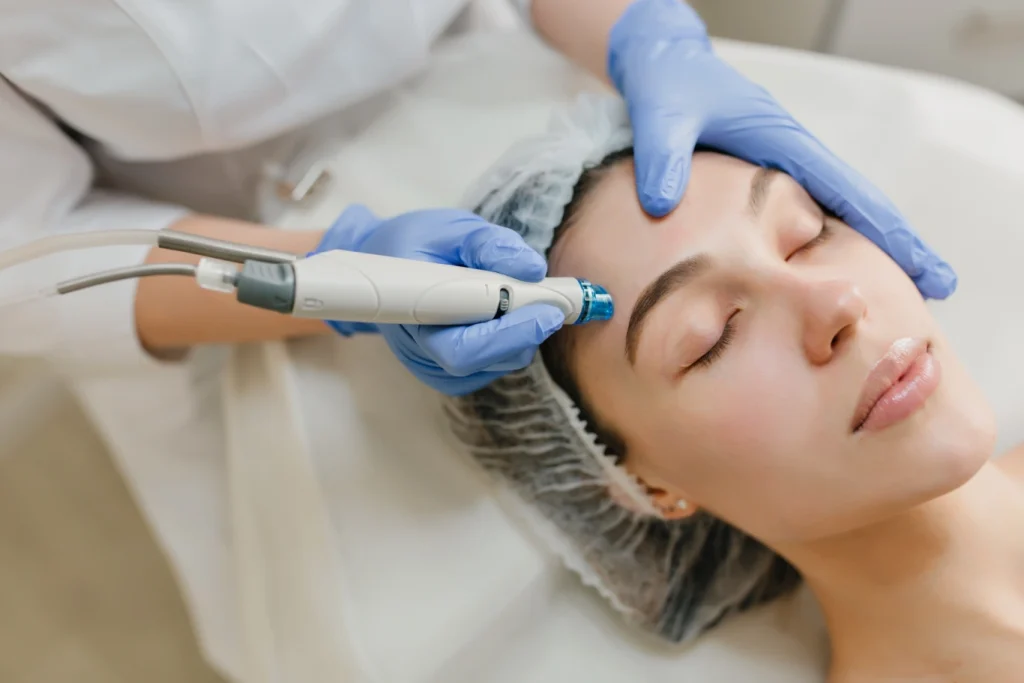
Aftercare isn’t optional extra guidance. For skin treatments in Dubai specifically, what you do in the 48 to 72 hours after a session has a direct effect on whether you get the result you came for or whether you develop the post-inflammatory hyperpigmentation that undoes it.
Dubai’s UV intensity, ambient heat, and humidity create a recovery environment that’s more demanding than most clinics’ standard aftercare instructions account for. This guide organises the key principles by treatment type and explains why the Dubai context changes the calculation.
The Principle That Applies to All Three Treatments
Every treatment covered here: microneedling, chemical peels, and RF — works by creating controlled inflammation that triggers a healing and collagen response. The aftercare job is to let that response do its work without adding inflammatory stimulus that the skin can’t manage cleanly.
For Fitzpatrick IV–VI skin specifically (the most common skin types in Dubai’s patient population), this matters more than it does for lighter skin. Melanocytes in darker skin respond to inflammation by producing excess melanin. If the post-treatment period includes UV exposure, heat, exercise, or irritating skincare, the inflammation extends and deepens — and PIH is the result. The treatment works, but the recovery undoes it.
Microneedling Aftercare
Hours 0–2: Leave the skin alone. The micro-channels are open and the skin is at its most absorbent. Apply only what your clinician applied at the end of the session — typically a hyaluronic acid serum or growth factor product. Nothing else.
Hours 2–12: A gentle, fragrance-free cleanser (cool or lukewarm water only) if the skin needs it. A simple, low-ingredient barrier moisturiser. Still no actives, no makeup, no sunscreen — the skin is still absorbing and the channels need to close without introducing irritants.
Day 1–2: Redness similar to mild sunburn. The skin may feel tight and warm. Cool water, gentle cleanser, fragrance-free moisturiser. When you go outside, mineral sunscreen (zinc oxide or titanium dioxide) applied gently — chemical sunscreens require rubbing in and aren’t ideal on healing skin. In Dubai, going outside without sunscreen at this stage is not an option.
Day 2–3: Redness fades. Some people notice mild roughness or sandpaper texture — this is normal skin turnover and should not be scrubbed or exfoliated. Continue gentle cleanser, moisturiser, SPF. No gym.
Day 3–5: Most redness is gone. The skin may have a slight flaky quality in some areas. Let it shed naturally — picking or rubbing accelerates PIH risk. You can reintroduce makeup if the skin is comfortable, washing brushes and sponges beforehand.
Day 5–7: Return to normal skincare gradually. Reintroduce vitamin C first, then niacinamide. Hold retinoids until at least day seven and introduce at low concentration.
What to avoid in the first 48 hours: exercise that causes sweating, hot showers or baths, saunas, steam rooms, pools, direct sun exposure, makeup, active skincare ingredients (retinoids, vitamin C, AHAs, BHAs), anything that creates friction on the skin.
Chemical Peel Aftercare
The aftercare approach depends on the peel depth.
Superficial peel (mandelic, lactic, low-concentration salicylic): Expect one to three days of mild redness and dry skin. Sometimes visible flaking from day two or three. Downtime is minimal. Gentle cleanser, barrier moisturiser, and strict SPF from day one.
Medium peel (TCA 15–35%, higher-concentration AHAs): More visible peeling from day two or three, continuing through days four to six. Do not pick the peeling skin — the layer underneath is not yet ready to be exposed and manual peeling creates PIH risk. In Dubai’s heat, peeling skin is also more prone to inflammation just from ambient temperature. Stay in air conditioning during the active peeling phase where possible.
For all peels: The same UV principle applies as with microneedling, but more emphatically. Peeled skin is at its most vulnerable to UV stimulus. Mineral SPF 50, reapplied every two hours outdoors, hat, shade. Not negotiable. This is the period when PIH from sun exposure is most likely, and once it forms it takes months to reverse.
Don’t pick, scratch, or rub the flaking skin. Let it shed on its own timeline. Products to avoid during active flaking: retinoids, AHAs, BHAs, vitamin C, any exfoliating ingredient. Use a plain, gentle moisturiser and SPF only until flaking has fully resolved.
RF Microneedling Aftercare
RF microneedling leaves the skin warmer and sometimes more reactive than standard microneedling in the first 24 to 48 hours, because the thermal component adds to the inflammatory stimulus. Extend the conservative timeline by one to two days compared to standard microneedling.
Day 0–2: Cool gentle care. Cool compresses can soothe the warm sensation in the hours after treatment. No exercise, no hot water, no sauna. Mineral SPF when going outside.
Day 2–4: Redness fades. Some patients see mild peeling or a sandpaper quality by day three. Same approach — let it shed, gentle moisturiser, strict SPF.
Day 4–7: Return to normal routine gradually. Reintroduce actives in the same order as microneedling: vitamin C first, then niacinamide, retinoids last.
Two-week rule: Don’t book another surface treatment — peel, laser, dermaplaning — within two weeks of an RF session. The skin is still in active remodelling and stacking treatments too close together increases inflammation without improving results.
Dubai-Specific Notes
In summer (April to October), the combination of extreme UV, heat, and humidity makes aftercare more demanding.
Morning or evening clinic appointments reduce the sun exposure risk in the immediate post-treatment window. Walking to a car in midday Dubai heat with freshly treated skin is a genuine PIH risk, not a theoretical one.
The air conditioning in most Dubai buildings is intensely dry, which can dehydrate healing skin. A simple, non-fragranced hydrating mist is useful during the recovery period for this reason.
For patients with Fitzpatrick IV–VI skin, the PIH risk from skipping or inadequate SPF during recovery is meaningfully higher than for lighter skin tones. For the full picture of why and how to prevent it, see PIH After Acne and Procedures in Dubai and Acne Scars on Darker Skin (Fitzpatrick IV–VI) in Dubai.
For advice on timing treatments around Dubai’s seasons, see Summer vs Winter in Dubai: When to Book.