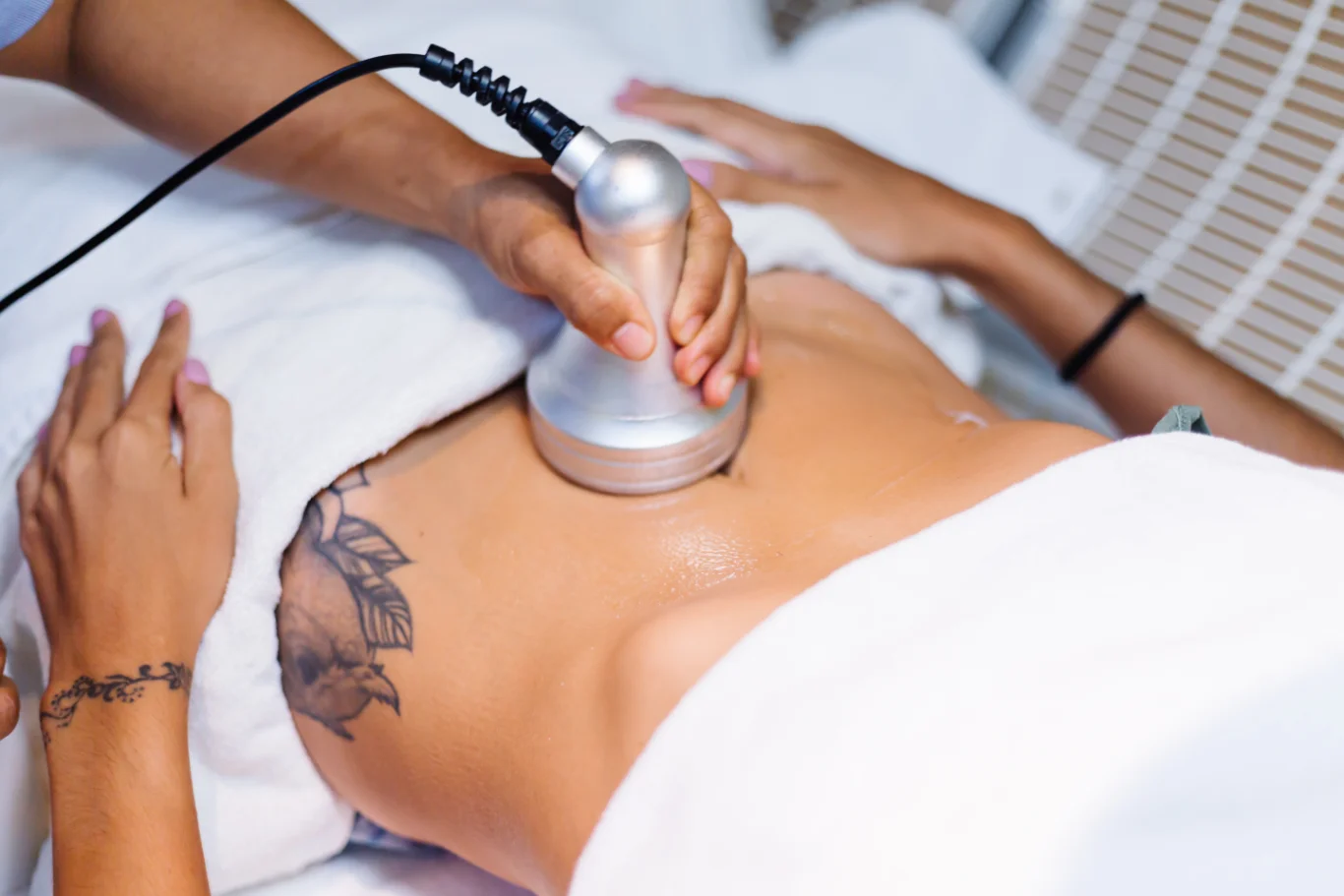
People looking into non-surgical body contouring in Dubai will encounter RF tightening and ultrasonic cavitation constantly, often presented as interchangeable or as a single combined treatment. They’re not the same thing, and understanding what each one actually targets determines whether you get the result you’re hoping for.
The clearest way to think about it: RF works on skin and collagen. Cavitation works on subcutaneous fat. They address different tissue layers with different mechanisms, which is exactly why combining them makes sense when both concerns are present — and why using just one when you need the other produces a disappointing result.
How RF Body Tightening Works
Radiofrequency energy delivers controlled heat into the dermis and the fibroseptal network beneath it. The heat has two effects. The first is immediate: existing collagen fibres contract on contact with the heat, producing some visible tightening within the session. The second is cumulative: the heat signals fibroblasts to produce new collagen over the following weeks, which continues building for eight to twelve weeks after the last session.
The result is improved skin firmness, reduced laxity, and a modest improvement in skin texture. RF directly addresses the quality of the skin itself — the degree to which it’s firm versus loose, the presence of crepey or sagging texture. It does not significantly reduce fat volume.
RF is the right tool when the concern is laxity. After weight loss, after pregnancy, after the natural collagen reduction that comes with age — these are situations where the skin hasn’t kept pace with the underlying change, and RF helps rebuild that structural support.
How Ultrasonic Cavitation Works
Cavitation uses low-frequency sound waves to create micro-pressure changes in the fluid surrounding subcutaneous fat cells. These pressure changes generate tiny bubbles that collapse and disrupt the fat cell membranes. The cell contents are released into the interstitial fluid and cleared through the lymphatic system over the following days.
The result is a gradual reduction in circumference at the treated site. Cavitation doesn’t affect the skin above the fat layer in the same way RF does — it targets the fat layer specifically. Good skin tone at the treatment site means the skin will accommodate the volume reduction without additional laxity. Poor skin tone at the treatment site means cavitation alone will reduce the fat but leave the skin looking less firm than before — which is why RF is typically combined when both issues are present.
Cavitation is the right tool when the concern is a localised, pinchable fat deposit with decent skin tone. Small areas that haven’t responded to diet and exercise, in someone at or near their healthy weight.
What Neither Treatment Does
Neither RF nor cavitation addresses visceral fat. Visceral fat sits around the abdominal organs and is metabolically distinct from subcutaneous fat. No external device reaches it. If the concern is overall abdominal volume rather than a specific subcutaneous deposit, the underlying driver may be visceral fat, and lifestyle changes are the only thing that affects it.
Neither treatment produces meaningful weight loss. The scale doesn’t move, and expecting it to leads to frustration. Circumference measurement and clothing fit are more accurate ways to track what’s happening in the treatment area.
Sequencing When Both Are Needed
When laxity and a localised fat pocket are present in the same area — common on the abdomen, inner thighs, and upper arms — both tools fit into the same programme.
The professional consensus on sequencing is to run cavitation first and RF second within the same session or on alternating sessions. Cavitation first disrupts the fat before any tissue tightening occurs. RF afterwards tightens the skin and improves the contour of the area once the fat layer has been addressed. Starting with RF tightens the tissue before fat disruption, which can limit the overall improvement.
A typical combined programme: six to eight sessions alternating cavitation and RF, one to two weeks apart. Within sessions where both are used, cavitation runs first, then RF. Hydration and light walking in the 48 hours following each cavitation session support lymphatic clearance of the disrupted fat.
By Concern: A Practical Guide
Skin laxity without significant fat: RF alone, four to six sessions. Typical situations — mild loose skin after moderate weight loss, early post-pregnancy skin once cleared by a clinician, above-knee or upper arm crepe texture.
Localised fat deposit with good skin tone: Cavitation alone, four to eight sessions. Typical situations — small lower abdominal pocket, love handles, inner thigh deposit in someone stable at their healthy weight.
Both laxity and a fat pocket: RF plus cavitation in combination, six to ten sessions. The most common presentation in practice, particularly on the abdomen and thighs.
Cellulite: Primarily a fibroseptal and microcirculatory issue rather than a simple fat or laxity problem. RF improves skin texture and has some effect on the fibroseptal network. Cavitation helps with the fat component. Vacuum massage adds lymphatic and circulatory benefit. The detailed approach is in Cellulite in Dubai.
What to Expect and When
RF results: some early firming visible within sessions, with peak collagen remodelling occurring at weeks eight to twelve after the final session. Reviews taken too soon after completing a course consistently underestimate the final outcome.
Cavitation results: gradual. Circumference changes in the treatment zone typically become measurable from sessions three to four. The body continues processing the disrupted fat cells for several weeks after the session — staying hydrated and keeping activity levels up helps this process.
Combined programme results: the combination consistently produces a more balanced outcome than either tool alone when both concerns are present. Skin tone and firmness improve alongside circumference reduction, rather than one improving at the expense of the other.