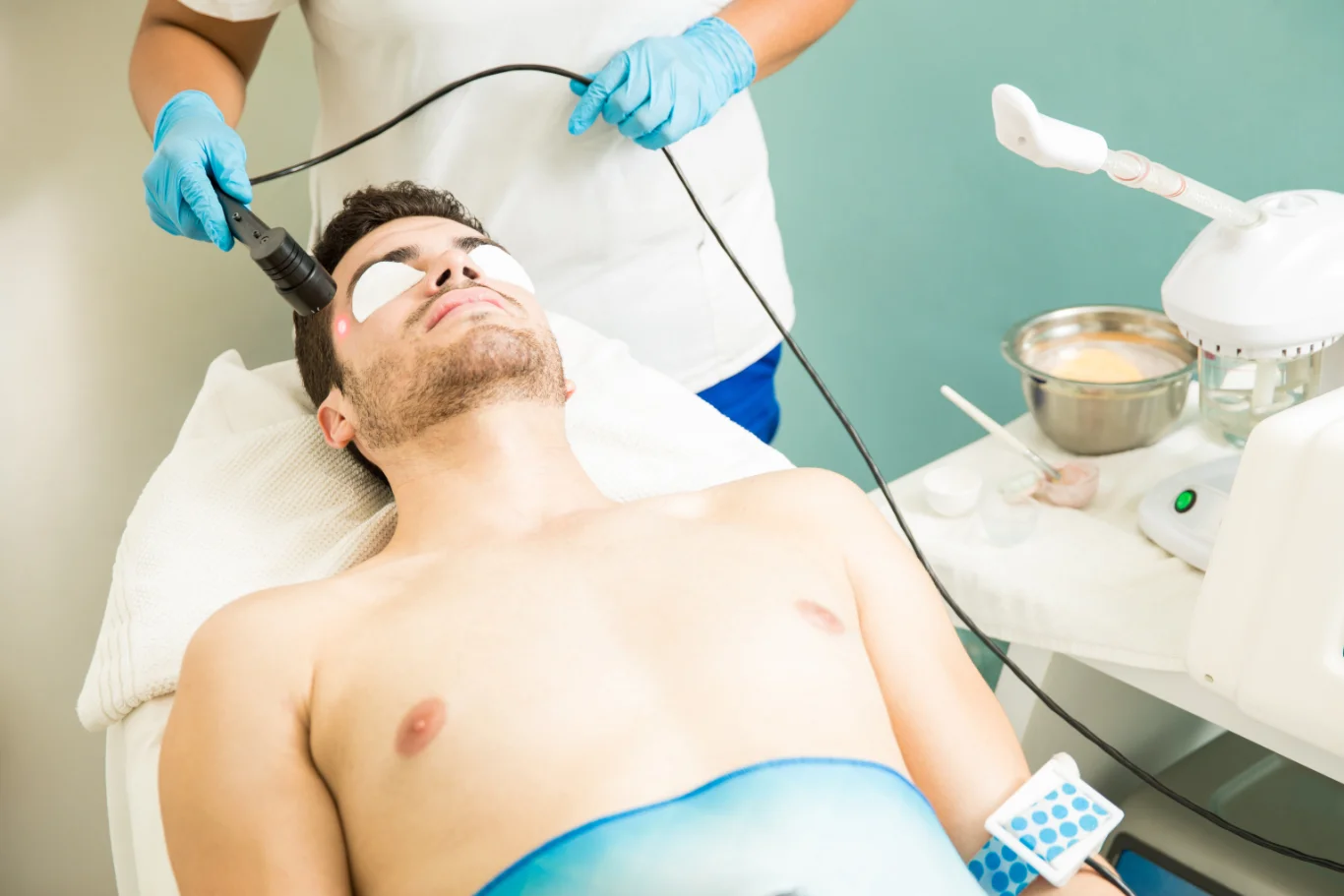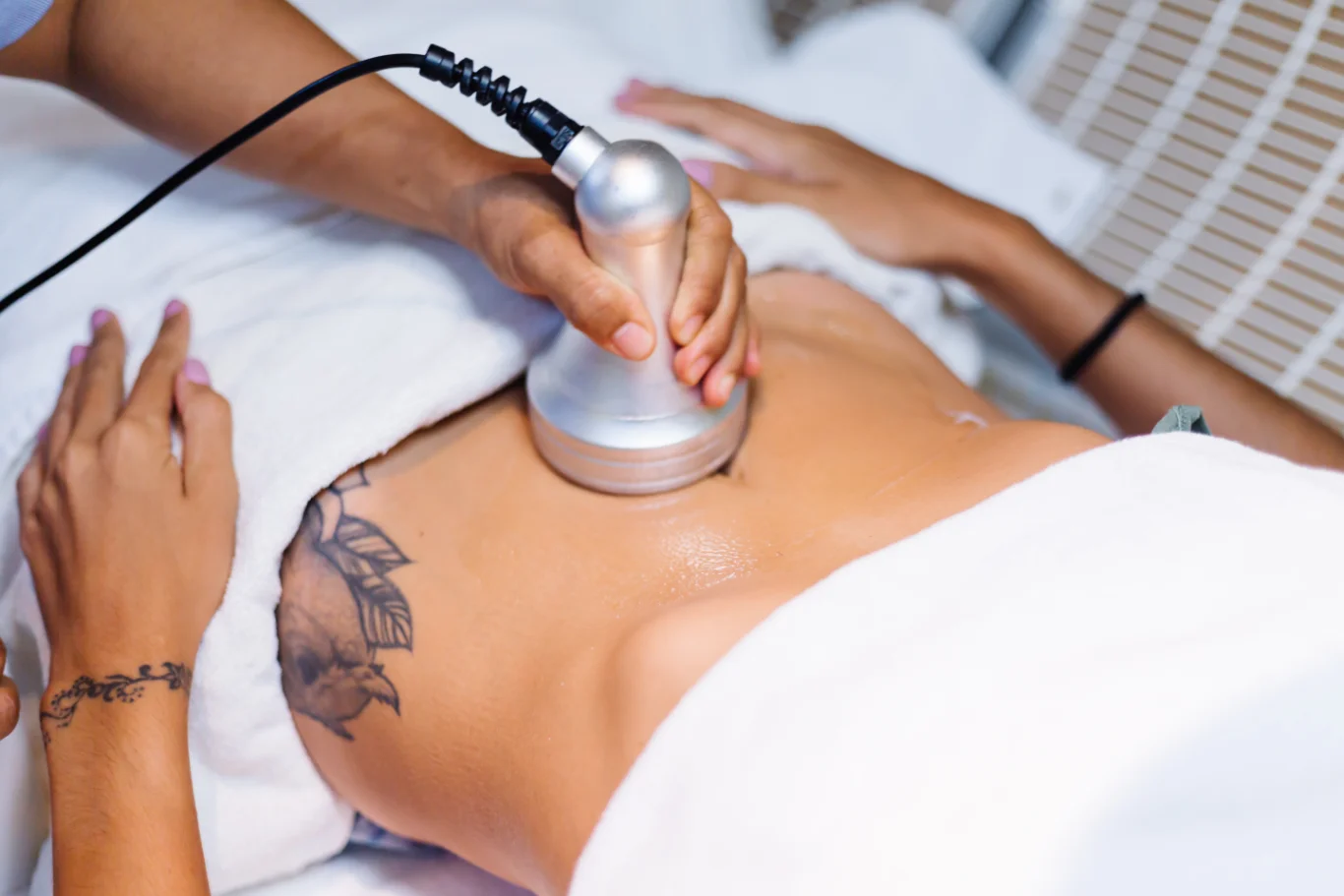
Both fractional laser and microneedling work by creating controlled injury to the dermis and triggering the skin’s collagen repair response. The structural idea is the same. But the way they create that injury, the depth they reach, the downtime they produce, and the risk they carry for darker skin are different enough that the choice between them genuinely matters.
In Dubai, where a large proportion of patients have Fitzpatrick IV–VI skin, this choice comes up in almost every acne scar consultation.
What Each Treatment Actually Does
Microneedling uses a device tipped with fine needles that penetrate the skin to a controlled depth, typically between 0.5mm and 2.5mm depending on the area and scar depth. The micro-injuries trigger fibroblasts to produce new collagen and elastin. There’s no heat involved at the epidermis. The surface of the skin stays largely intact, which is why downtime is short, usually 24 to 48 hours of redness, and why the PIH risk for darker skin is considerably lower.
RF microneedling adds radiofrequency energy delivered through insulated needles directly into the dermis. The RF heat creates thermal zones of injury at depth without reaching the melanin-rich epidermis above. This gives it a stronger collagen-remodelling effect than standard microneedling while maintaining a much safer profile for darker skin than laser. For most Fitzpatrick IV–VI patients, this is where the combination of efficacy and safety is strongest.
Fractional CO2 laser is the most powerful resurfacing tool in the acne scar toolkit. It ablates columns of tissue, removing damaged skin and triggering a deeper, more aggressive collagen synthesis response than either microneedling option. The results in studies are consistently stronger than microneedling for moderate to severe atrophic scars. But the trade-off is real: five to seven days of downtime, more pain during the procedure, and a meaningfully higher rate of post-inflammatory hyperpigmentation in darker skin. A split-face study published in PMC found PIH rates of 30% on the fractional CO2 side compared to around 7% on the microneedling side in the same patients. For Fitzpatrick V specifically, PIH occurred in half of the CO2-treated participants.
Non-ablative fractional laser works differently from CO2: it coagulates tissue without ablating the surface, so there’s no open wound. Downtime is lower, PIH risk is lower, and the results are more gradual. It’s a more reasonable option for darker skin than ablative CO2, though it typically requires more sessions to reach similar improvement.
The Head-to-Head Evidence
A 2026 meta-analysis pooling eight randomised controlled trials found that fractional CO2 laser outperformed RF microneedling on scar improvement scores and patient satisfaction. The efficacy edge for laser is real in the research. But the same analysis confirmed that laser carried significantly higher pain, longer erythema duration, and a greater PIH risk.
A retrospective study comparing fractional CO2 and RF microneedling directly concluded that the two were equally effective overall for atrophic acne scars, but that RF microneedling was the better choice for darker skin specifically because of the lower PIH incidence and shorter downtime.
The practical conclusion from the evidence isn’t that one is universally better. It’s that the right choice depends on your scar severity, your skin tone, how much downtime you can accommodate, and your history with PIH.
Why We Start with Microneedling for Fitzpatrick IV–VI
For patients with darker skin, the logic for starting with RF microneedling rather than laser isn’t about avoiding laser forever. It’s about sequencing carefully.
Melanocytes in Fitzpatrick IV–VI skin respond more aggressively to inflammation and heat. A treatment that works well at one energy level on lighter skin can trigger a significant PIH response on darker skin at the same setting. The first sessions of any scar programme need to establish how your skin responds before ramping up intensity. Starting with RF microneedling gives the clinician that information, and it delivers genuine scar improvement in the process.
If the skin responds well across three or four RF microneedling sessions with no significant PIH, a non-ablative fractional laser can be introduced with conservative settings for the structural scarring that remains. This is a common second phase in a longer programme. The ablative CO2 laser is reserved for patients with lighter skin or those who’ve already demonstrated a low PIH response to prior treatment.
For the full sequencing logic across a 3-month plan, see 3-Month Acne Scar Reset in Dubai.
What About Specific Scar Types?
The treatment response also depends on which kind of scar you’re dealing with.
Rolling scars, which create an undulating wave-like texture, are caused by fibrous bands tethering the skin from below. Microneedling and RF microneedling improve them but don’t fully release the tether. Subcision does that more directly. If your rolling scars haven’t responded well to microneedling sessions, this is worth discussing with a clinician.
Boxcar scars, with their defined edges and flat base, respond to both microneedling and fractional laser. The choice depends on severity and skin tone.
Ice-pick scars are too narrow and deep for surface treatments to reach effectively. TCA Cross (trichloroacetic acid applied precisely into the scar base) is the more targeted approach for these, usually done alongside broader resurfacing.
Downtime Comparison
If downtime is a limiting factor, this is worth knowing clearly:
Standard microneedling: 24 to 48 hours of redness. Most patients return to work the next day.
RF microneedling: 24 to 48 hours of redness and warmth, occasionally a sandpaper texture that settles within two to three days.
Non-ablative fractional laser: two to four days of redness and mild swelling.
Fractional CO2 laser: five to seven days of redness, swelling, and peeling. Makeup is typically possible from day four or five.
For a broader aftercare guide covering all these treatments, see Acne Scars on Darker Skin (Fitzpatrick IV–VI) in Dubai.
How Many Sessions You’ll Need
With microneedling or RF microneedling, most patients need four to six sessions for meaningful improvement. With fractional CO2 laser, the stronger per-session effect means some patients see significant change in two to three sessions, though maintenance and combination treatments are still commonly part of the plan.
For a breakdown by scar type and treatment, see How Many Sessions Do You Need for Acne Scars in Dubai?
The Short Version
For lighter skin with significant scar depth and no PIH history: fractional CO2 laser is a reasonable first-line choice if you can handle the downtime.
For Fitzpatrick IV–VI or any patient with a PIH history: start with RF microneedling, build the programme, and introduce laser only after confirming how the skin responds.
For any skin type: sun protection throughout is non-negotiable. Without it, any improvement you achieve is undermined the next time UV hits your skin.