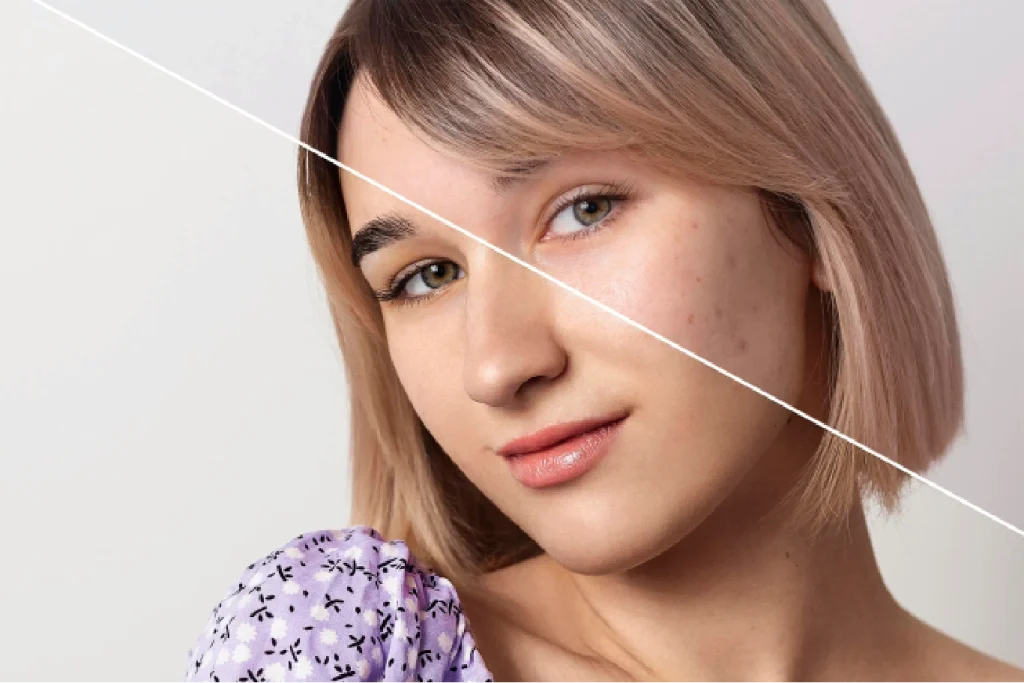
Pigmentation is a broad term that covers several different conditions, and the treatment approach depends heavily on which one you actually have. Someone with melasma needs a different plan from someone with PIH from acne, and both need a different approach from someone dealing with sun spots accumulated over years of Gulf sun exposure. Lumping them together into a generic “pigmentation treatment” often leads to the wrong choice.
This guide maps the main types of hyperpigmentation common in Dubai, explains the logic behind treatment for each, and outlines what actually produces results versus what sounds good on a clinic’s brochure.
The Types Worth Knowing
Post-inflammatory hyperpigmentation (PIH) is the flat dark mark left after inflammation — a breakout, a scratch, a procedure that was too aggressive for your skin. It’s caused by excess melanin produced during the healing response. PIH is not permanent structural damage, but in darker skin it can persist for months to a year or more without intervention. The dedicated guide on PIH after acne and procedures in Dubai covers the specific management approach.
Melasma presents as brown or grey-brown patches, typically on the cheeks, forehead, upper lip, and chin. The mechanism is similar to PIH in that melanocytes are overproducing melanin, but the trigger is different: melasma is driven by UV exposure and hormonal influences, including oestrogen and progesterone. Pregnancy, oral contraceptives, and certain other hormonal factors frequently trigger it. The distinction matters because melasma is substantially more difficult to treat than PIH — it requires ongoing management rather than a course of treatment, and certain aggressive approaches (particularly ablative lasers) can cause rebound pigmentation that’s worse than the original. See Melasma Treatment in Dubai for the full approach.
Sun spots and solar lentigines are flat, well-defined dark marks caused by cumulative UV exposure. They’re very common on the face, hands, and shoulders in Dubai’s climate. Unlike melasma, they’re not hormonally driven, which makes them respond more predictably to laser and peel treatments.
Freckles are small, flat spots caused by a hereditary tendency toward localised melanin production, activated by sun exposure. They’re generally lighter and easier to fade than other pigmentation types, though they can also return with sun exposure after treatment.
Uneven skin tone without a specific diagnosis — generalised dullness, patchiness, or lack of radiance — is often multifactorial, combining mild UV damage, dehydration, mild PIH, and surface-level accumulation of dead cells. This responds well to a consistent topical routine and periodic exfoliation or superficial peels.
What Actually Produces Results
Sun protection is the foundation of every pigmentation treatment plan in Dubai, without exception. Ultraviolet light stimulates melanocyte activity regardless of the type of pigmentation. Treating pigmentation without consistent sun protection is the equivalent of mopping the floor while the tap is still running. SPF 50 broad-spectrum daily, reapplied every two hours during outdoor exposure, is not optional. Iron oxide-containing sunscreens also block visible light, which is a meaningful additional protection for melasma and deeper PIH.
Topical depigmenting agents address the melanin pathway directly. The most evidence-backed options for darker skin in Dubai:
Vitamin C (L-ascorbic acid at 10–20%) applied in the morning under sunscreen inhibits tyrosinase, the enzyme that drives melanin synthesis. Visible improvement in eight to twelve weeks with consistent use.
Azelaic acid (10–20%) has both anti-inflammatory and tyrosinase-inhibiting properties. Particularly useful for combined acne and pigmentation concerns, and well-tolerated in darker skin because it’s less irritating than many alternatives. Studies show meaningful PIH improvement at 16 weeks with 15–20% formulations.
Niacinamide (5%) reduces the transfer of melanin to skin cells rather than production itself. Low irritation, pairs effectively with the above.
Tranexamic acid (topical or oral) has strong clinical evidence for melasma and PIH, including in darker skin. Growing in clinical use in Dubai dermatology practices.
Retinoids at low concentrations used at night accelerate cell turnover, which speeds the shedding of melanin-containing cells. Needs careful introduction in darker skin to avoid the irritation-driven PIH that can occur at higher concentrations.
Superficial and medium chemical peels using glycolic, lactic, mandelic, salicylic, or TCA at appropriate concentrations exfoliate the outer skin layers and reduce surface pigmentation over a series of sessions. For darker skin, mandelic and lactic acids are generally safer starting points than glycolic or high-concentration TCA, which carry a higher PIH risk if not properly calibrated. For the full comparison of peels versus microneedling for pigmentation, see Best Chemical Peels for PIH in Dubai.
Q-switched Nd:YAG laser breaks down melanin deposits using short energy pulses and has a better safety profile for darker skin than IPL or ablative lasers. It’s particularly useful for PIH, sun spots, and certain melasma cases when used conservatively. IPL, by contrast, carries a meaningfully higher risk of worsening pigmentation in Fitzpatrick IV–VI skin and is generally avoided in darker skin types.
Pico laser delivers energy in picosecond pulses, which shatters melanin particles without the same degree of thermal heating as older Q-switched devices. It’s increasingly used for stubborn pigmentation and certain melasma cases where other lasers haven’t produced adequate response.
What Doesn’t Work Well
Aggressive ablative laser treatments for melasma often cause rebound pigmentation worse than the original. Melasma is hormone and UV driven — the laser injures the skin, triggers an inflammatory response, and the melanocytes respond by producing more melanin. Unless parameters are very conservative and UV protection is extremely rigorous, the relapse rate is high.
IPL on darker skin carries significant risk. The broadband light is absorbed by surface melanin unpredictably, often resulting in burns, hypopigmentation, or a worsened PIH response. Most clinics with experience in Dubai’s diverse patient population don’t offer IPL for Fitzpatrick IV–VI skin.
High-strength peels without professional assessment in darker skin generate inflammation that creates new PIH while supposedly treating existing pigmentation. Off-the-shelf high-strength peels intended for lighter skin are a common cause of worsened pigmentation in Dubai patients.
Dubai-Specific Factors
The combination of year-round high UV, heat, and many patients with Fitzpatrick IV–VI skin creates a specific risk environment. Pigmentation that fades during a mild-UV period in other countries tends to re-emerge when returned to Gulf sun levels. This is why maintenance is always part of the plan — not because treatments haven’t worked, but because the environmental trigger is constant.
For people who spend significant time outdoors, a hat, shade, and reapplication of SPF are as much part of pigmentation management as any topical or procedure. More on building a sun protection routine suitable for Dubai’s climate in Sunscreens by Lifestyle in Dubai.