Your Google Search Console dashboard looks healthy. Impressions are climbing, clicks are up month over month, and your dental clinic is finally showing up on page one for terms you have been chasing for a year. Then you check the front desk schedule and it tells a different story. The phone is not ringing more. The WhatsApp inbox is not busier. New patient bookings have barely moved.
This is one of the most common frustrations we hear from clinic owners in Dubai, and it is rarely a traffic problem. It is a conversion problem. Traffic tells you that people found your website. Bookings tell you whether your website actually did its job. Those are two very different metrics, and treating them as the same thing is why so many marketing budgets get blamed for underperformance when the real issue sits somewhere between the click and the confirmed appointment.
In this guide, we will walk through why search traffic and patient bookings diverge, the specific friction points that quietly drain leads from dental clinic websites, the compliance layer that makes this even more complex in Dubai, and a practical way to diagnose where your own funnel is breaking.
Traffic Is Not the Same as Bookings
It helps to start with a reality check on numbers. Across industries, average website conversion rates typically fall somewhere between 2 and 5 percent, and healthcare services tend to sit on the lower end of that range because appointment bookings carry more weight and more hesitation than an ecommerce purchase. For a dental clinic specifically, industry data commonly points to conversion rates around 1 to 2 percent as typical, with well optimized practices reaching closer to 5 percent or higher.
Do the math on your own traffic. If your website gets 1,000 visits a month at a 1 percent conversion rate, that is 10 new patient inquiries. Push that same traffic to a 4 or 5 percent conversion rate and you are looking at 40 to 50 inquiries without spending a single additional dirham on ads or content. This is the part clinic owners often miss. The fastest, cheapest way to grow patient volume is usually not more traffic. It is fixing what happens after someone lands on your site.
What Good Actually Looks Like for a Dubai Dental Clinic
Dubai’s dental market is dense and highly competitive, with patients often comparing three or four clinics before deciding. That comparison shopping behavior means your conversion rate benchmark should account for a slightly more skeptical, more mobile, and more WhatsApp reliant patient base than what generic international benchmarks assume. A realistic target for a Dubai clinic with a reasonably optimized site is 3 to 5 percent across combined channels, meaning calls, WhatsApp messages, and form submissions added together, not just online form fills in isolation.
The Real Reasons Traffic Isn’t Converting
When a clinic has rising traffic and flat bookings, the cause almost always falls into one of five categories. Most clinics are dealing with more than one at the same time.
You’re Ranking for the Wrong Search Intent
Not every visitor who lands on your site is close to booking. Someone searching a broad, informational term is usually still researching. Someone typing a specific, symptom driven or service specific query is much closer to making a decision. If your content and your SEO strategy are built around broad terms rather than the specific questions patients are actually asking, you will attract visitors who are not yet ready to act, and your conversion rate will look weak even though your rankings look strong.
The fix is building content around real patient concerns rather than generic service descriptions. A page that simply lists “we offer dental implants” does far less work than a page that answers what a patient actually wants to know before booking, such as recovery timelines, pain levels, and what the first visit involves. Pages that speak directly to specific patient questions consistently convert better than generic service pages, because they meet the visitor at the exact point of their decision making process.
Booking Friction Is Killing Warm Leads
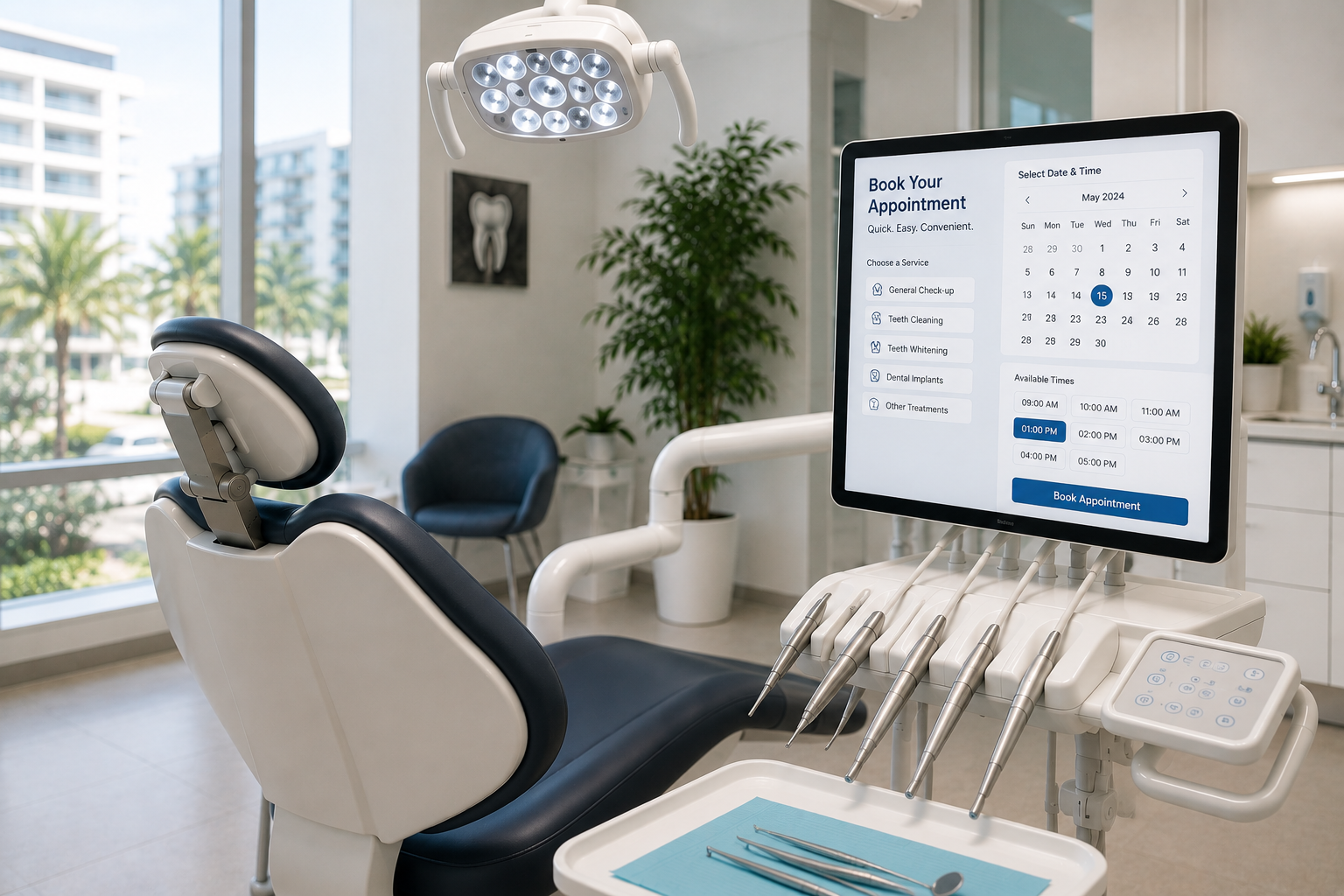
This is the single biggest conversion killer we see on dental clinic websites, and it is almost always self inflicted. A patient who is ready to book clicks a “Book Now” button expecting something close to instant. Instead they land on a form asking for full name, date of birth, insurance provider, reason for visit, and home address before the clinic has even spoken to them.
For an existing patient, that is manageable. For a new patient who is still weighing you against two other clinics in the same neighborhood, that is a wall. Research on booking flow abandonment has found that a large share of new patients drop off entirely when a booking form asks for more than four fields. Every additional field is a small tax on intent, and dental patients, particularly new ones, have very little patience for that tax.
The fix is not necessarily a fancier booking calendar. It is reducing the number of steps between “I want an appointment” and “I have made contact.” A short enquiry form, a one tap call button, and a visible WhatsApp option will outperform an elaborate booking system that demands too much information too early.
Missing Trust Signals
Dental treatment is not a low stakes purchase. Patients are trusting someone to work inside their mouth, often for a meaningful amount of money, and hesitation is a rational response to a website that gives them no reason to feel confident. If your site is missing patient reviews, before and after photos, real staff bios with credentials, and genuine photos of your clinic rather than stock imagery, you are asking visitors to take a leap of faith they are not ready to take.
This matters even more in a market like Dubai, where patients frequently compare local, Gulf, and Cooperation Council based providers alongside residency status and insurance networks. A clinic that visibly shows its DHA licensing, its specialists’ qualifications, and real patient outcomes gives a hesitant visitor the confidence to convert instead of continuing to compare.
Slow Mobile Experience
The majority of dental related searches in Dubai and across the UAE now happen on mobile devices. If your website is slow to load, difficult to navigate with a thumb, or forces visitors to pinch and zoom to read treatment information, you are losing a large share of your traffic before they ever see your booking option. Data from Google’s mobile user experience research has shown that a majority of mobile users abandon a page that takes longer than three seconds to load. Three seconds is not a lot of room for error, and many dental websites, particularly older ones built primarily for desktop, quietly fail that test every day.
No WhatsApp or Instant Response Channel
This is where Dubai specifically diverges from many international benchmarks used in generic conversion rate optimization content. In the UAE, WhatsApp is often the preferred first point of contact for patients, ahead of a traditional contact form and sometimes ahead of a phone call. A clinic website without a visible, working WhatsApp button on every page, including mobile, is asking local patients to use a channel they may actively avoid.
Response speed compounds this. A patient who messages a clinic and does not hear back within minutes will often message the next clinic on their shortlist instead. Missed calls and delayed WhatsApp replies are not a minor operational detail. They are a direct, measurable leak in the conversion funnel, and one that no amount of additional SEO traffic will fix.
The DHA and MOH Compliance Layer Dubai Clinics Can’t Ignore
Everything above applies to dental clinics anywhere in the world. Operating in Dubai adds a layer that most generic conversion rate optimization advice does not account for, and getting it wrong can cost you more than a lost lead.
Healthcare marketing in the UAE operates under Dubai Health Authority regulations, and in some cases Ministry of Health and Prevention rules depending on where your clinic is licensed. These rules govern what claims you can make, how testimonials can be presented, and what kind of before and after imagery requires prior approval. A CTA that says “guaranteed results” or a testimonial that implies a specific clinical outcome without appropriate context can put your clinic at compliance risk, regardless of how well it converts on paper.
This is not a reason to avoid trust building content. It is a reason to build it correctly. Patient reviews and testimonials can absolutely appear on your site, but they should reflect genuine patient experience rather than implied clinical guarantees. Before and after photography should follow DHA guidance on context and consent. CTAs should focus on booking a consultation or assessment rather than promising a specific result. A dental clinic marketing partner who understands this distinction protects you from both a compliance standpoint and a conversion standpoint, because compliant content, done well, still converts. It simply avoids language that regulators, and increasingly savvy patients, will flag as overreach.
How to Diagnose Where Your Funnel Is Breaking
Before fixing anything, you need to know where the leak actually is. Most clinics only track one metric, usually website traffic, and have no visibility into what happens after a visitor arrives. A proper diagnosis separates the funnel into stages.
Start by measuring your baseline. Set up conversion tracking that captures every meaningful action separately, meaning phone calls, WhatsApp clicks, form submissions, and any online booking completions, rather than lumping them into a single generic goal. Many clinics discover at this stage that WhatsApp is quietly generating more inquiries than their contact form ever did, which changes where design and messaging effort should go.
Next, look for friction points using the data you already have. Where do visitors land, and where do they leave. Which service pages get traffic but almost no engagement with the booking option. Session recordings and heatmaps, even basic free versions, tend to reveal obvious problems quickly, such as a booking button that is technically present but buried below content most visitors never scroll to.
Finally, prioritize based on impact rather than ease. A quick win, like adding a visible WhatsApp button to every page, might take an afternoon and move the needle immediately. A structural fix, like rebuilding a bloated booking form, takes longer but compounds over time. Both matter, but knowing the difference helps you sequence the work instead of guessing.
Fixing the Conversion Path, Not Just the Website
It is worth repeating a point that gets lost in most dental marketing advice. In the large majority of cases, a clinic does not need an entirely new website to fix a conversion problem. A full rebuild is expensive and slow, and it often rebuilds the same underlying mistakes with a nicer visual layer on top. What most clinics actually need is a conversion layer added to what they already have, meaning a shorter enquiry path, visible trust signals, a fast mobile experience, a working WhatsApp channel, and DHA compliant messaging that still gives patients a reason to act.
Quick wins worth implementing immediately include shortening any booking form to four fields or fewer, adding a sticky WhatsApp button on mobile, and placing at least one clear call to action above the fold on every service page. Structural fixes worth planning for include rebuilding your slowest loading pages, restructuring service pages around actual patient questions rather than generic descriptions, and setting up proper multi channel conversion tracking so future decisions are based on data rather than instinct.
Traffic growth and conversion growth are not competing priorities. They compound each other. A clinic that fixes its conversion path first will get significantly more value out of every additional visitor that future SEO and content work brings in.
Conclusion
Rising traffic with flat bookings is not a sign that your SEO is failing. It is usually a sign that your website is doing half its job. Attracting the right visitors matters, but so does what happens in the seconds after they land, from how fast your site loads to how many fields stand between them and a confirmed appointment. In a market as competitive and mobile driven as Dubai, and within a regulatory environment that shapes exactly how you can build trust, closing that gap is where real, measurable patient growth comes from.